 Free Ebook
Does My Child Have Dyslexia?
Subscribe to the Literacy Heroes Newsletter and get your FREE ebook, ‘Does My Child Have Dyslexia?’
Sign Up Today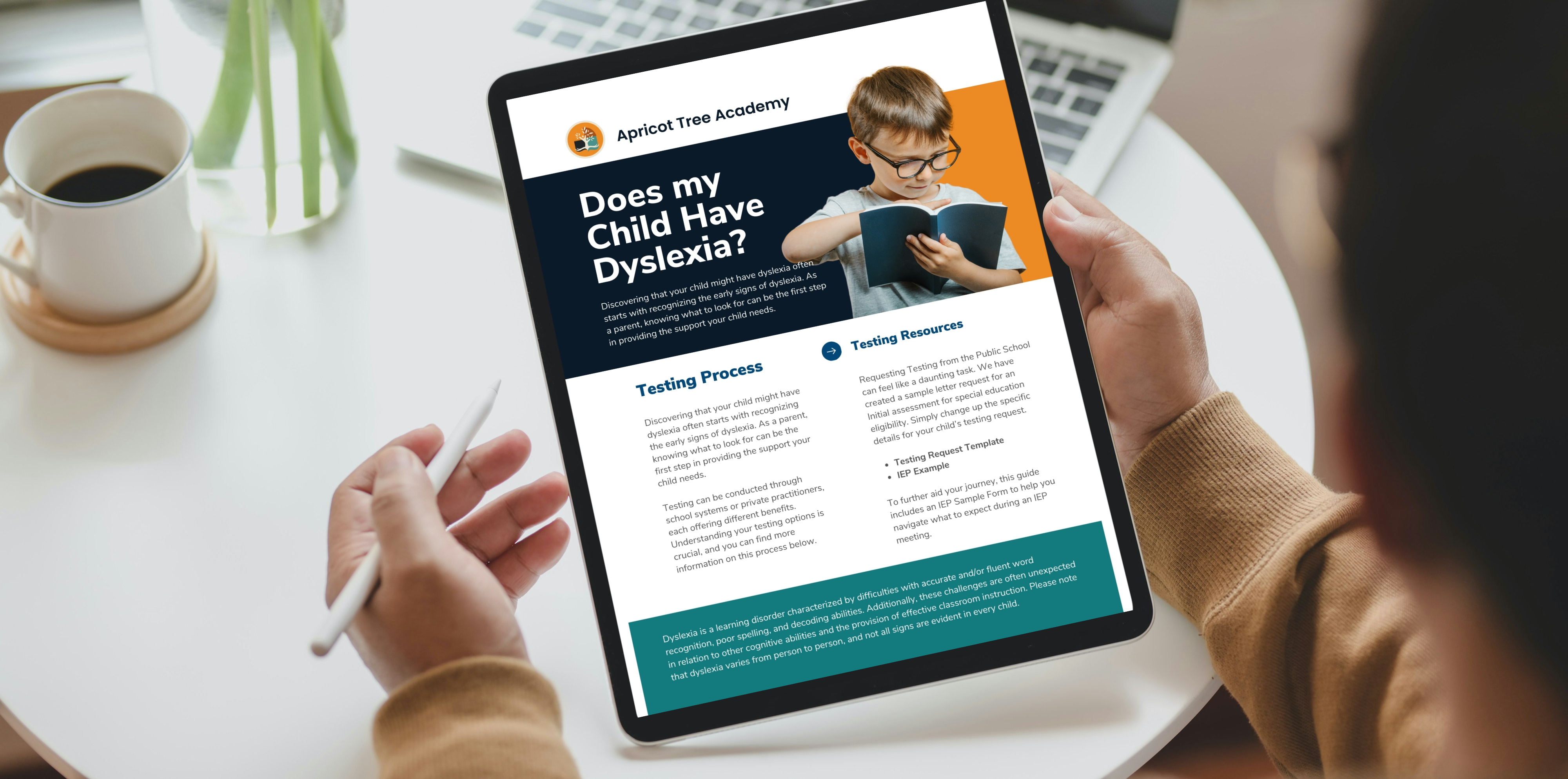
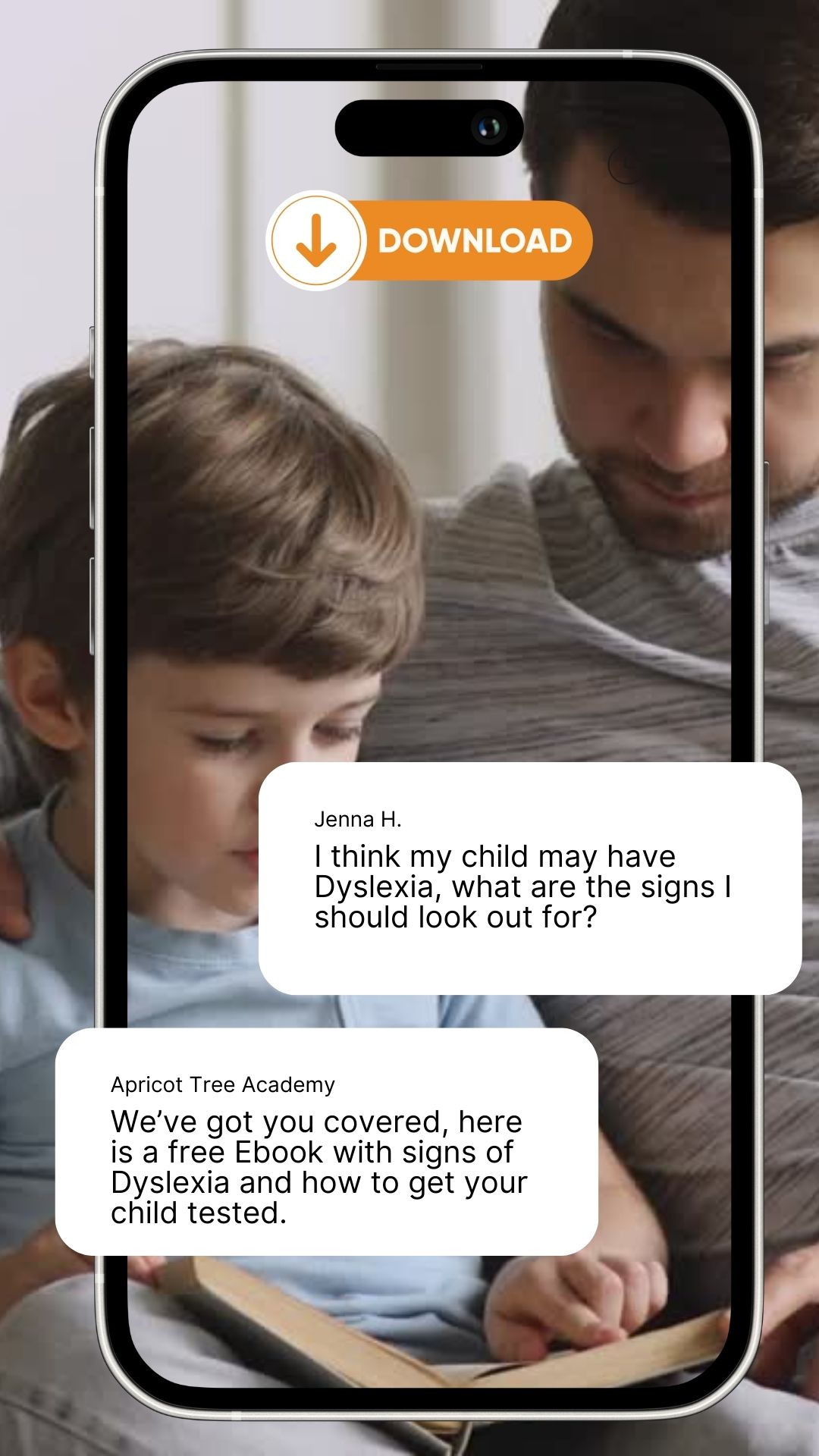
Are you wondering if your child might have dyslexia? Our free ebook from Apricot Tree Academy is here to guide you every step of the way. This comprehensive guide helps parents recognize and address dyslexia, offering valuable insights and practical advice. Knowing what to look for can be the first step in providing the support your child needs.
Signs of Dyslexia
School Testing: Learn how to initiate budget-friendly school evaluations, understanding the process and its limitations.
Private Testing: Discover the benefits of in-depth private assessments conducted by specialists.
Advocacy and Support: We guide you on collaborating with educators to ensure your child’s success.
IEP and 504 Plans: Actively participate in creating personalized educational plans and advocating for accommodations like extra time on assignments.
Legal Rights and Resources
Stay informed about your child’s educational rights:
Know Your Rights: Familiarize yourself with the Individuals with Disabilities Education Act (IDEA) and the concept of Free and Appropriate Public Education (FAPE).
Templates: Access sample letters and IEP forms to help you prepare for meetings.
Ready to empower your child’s educational journey? Subscribe now to get free access to our ebook and join a community of informed and proactive parents.
Common Questions About Dyslexia
What are the early signs of dyslexia in children?
Common early signs include trouble learning the alphabet, difficulty rhyming, mixing up similar-sounding words, slow or laborious reading, letter reversals after about age 7, messy handwriting, and a family history of reading difficulty. No child shows every sign, but several together is the typical pattern.
How do I get my child tested for dyslexia?
You can request a free evaluation from your child’s public school in writing, or pursue a more in-depth private assessment through an educational psychologist or dyslexia specialist. The free ebook explains both routes step by step.
At what age can dyslexia be identified?
Signs can appear as early as preschool, and dyslexia is often identified in kindergarten or first grade. The earlier it is identified and supported, the better the outcomes.
Is dyslexia a sign of low intelligence?
No. Dyslexia has nothing to do with intelligence. Many people with dyslexia are highly creative, capable problem-solvers; it is simply a difference in how the brain processes written language.
Can dyslexia be cured or outgrown?
Dyslexia is lifelong and cannot be outgrown, but with early, structured, evidence-based instruction, children with dyslexia become confident, capable readers.
Join the Literacy Heroes community today!
Subscribe to the Literacy Heroes Newsletter and get your free ebook, ‘Does My Child Have Dyslexia?’ — created to empower families of dyslexic learners.
We respect your privacy. Unsubscribe at any time.