
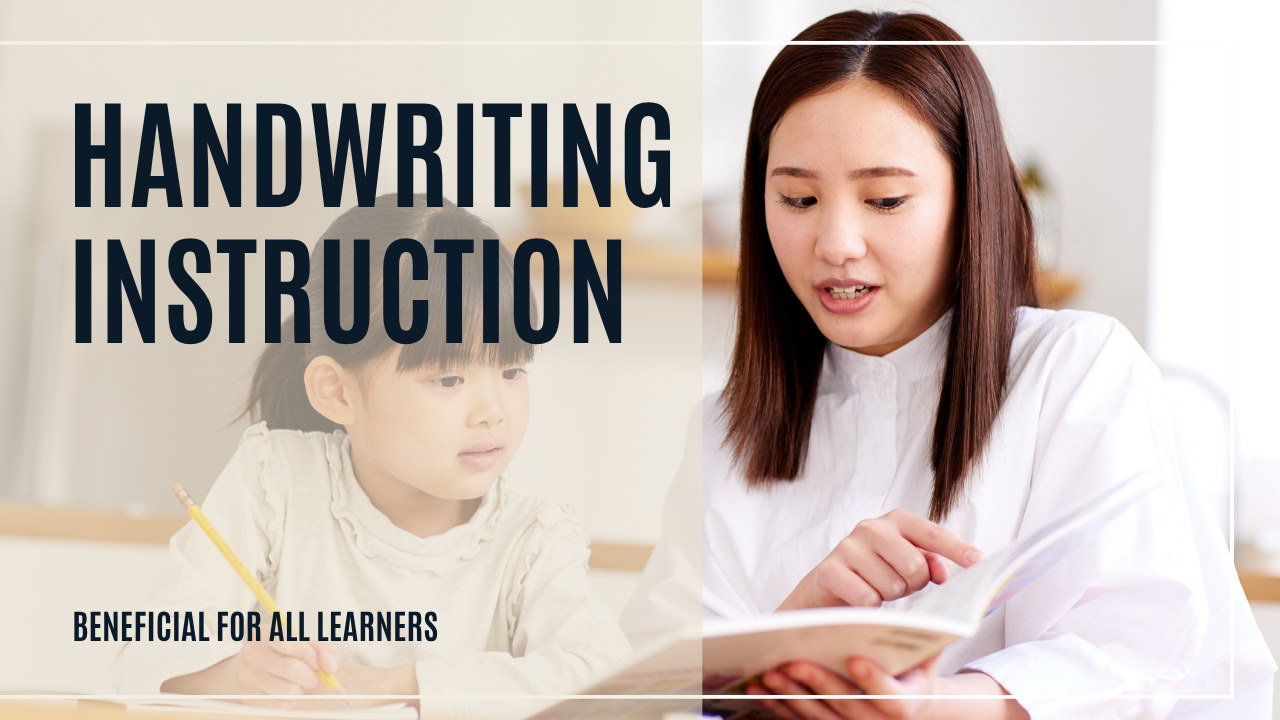
Yes, handwriting instruction is beneficial for all learners—and it is more than an old-fashioned skill. The practice of forming letters by hand builds neural pathways in the brain that support reading, spelling, memory, and motor coordination. As many schools shift toward keyboards and screens, intentional handwriting practice has become easy to lose and well worth keeping, particularly for children who struggle with reading.
Why does handwriting matter for the brain?
Handwriting plays a crucial role in building neural pathways during childhood development. Handwriting is the act of forming letters and words by hand, engaging motor, visual, and language systems all at once. Many schools have shifted their focus away from teaching handwriting, often prioritizing digital literacy over traditional writing skills. That shift has contributed to a decline in handwriting proficiency, which can affect cognitive development, memory retention, and academic performance. Beyond simply forming letters, handwriting nurtures the cognitive, motor, and sensory skills that help young learners grow.
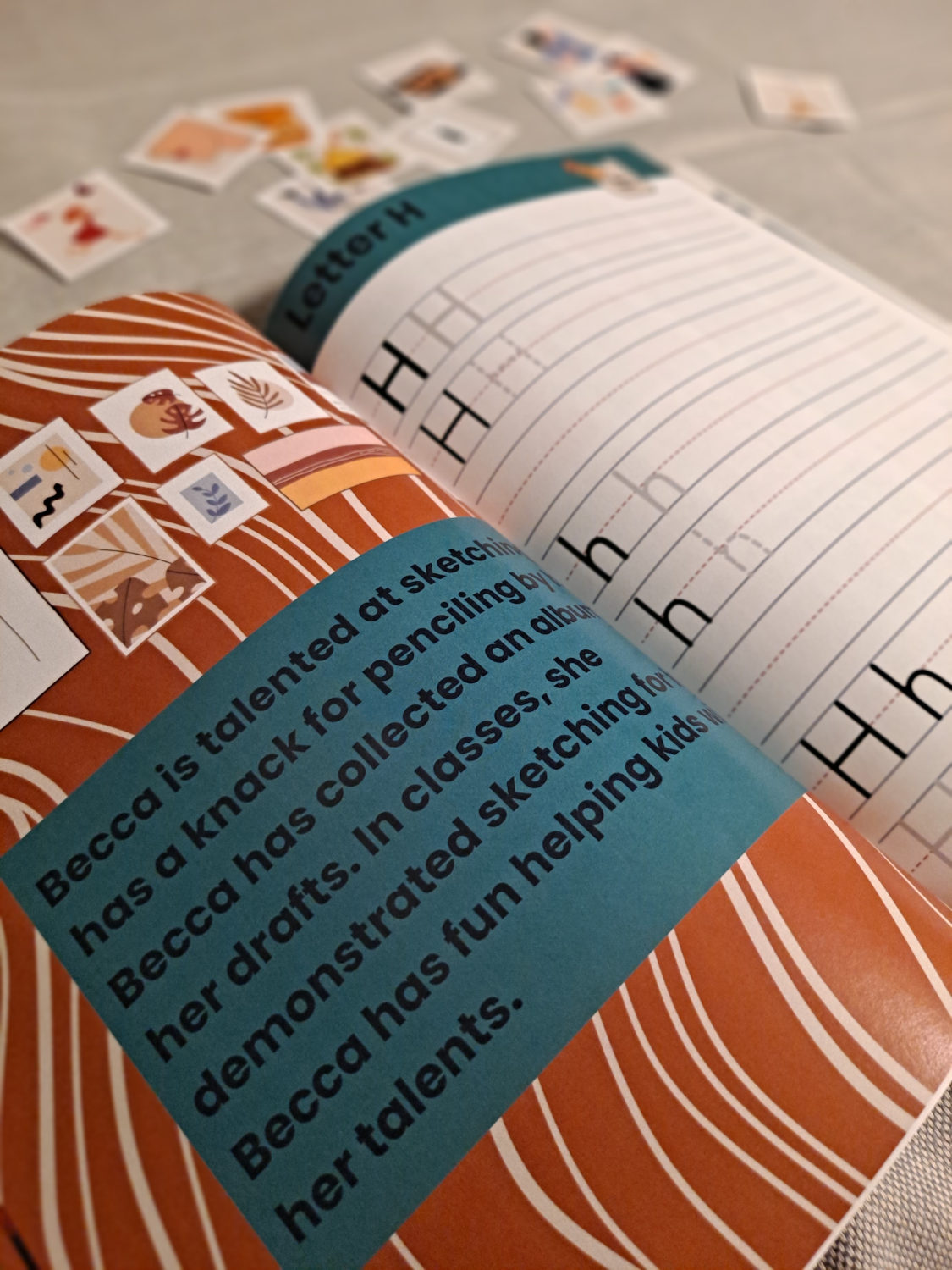
How does handwriting build fine motor and visual-motor skills?
As children learn to write, they refine their hand movements, improving coordination and control. This process strengthens the neural pathways tied to motor skills, so children can write with greater precision and ease over time. Handwriting also promotes visual-motor integration: a child has to visually perceive letters and shapes, then translate that information into accurate hand movements. With consistent practice, the connections between visual perception and motor control are reinforced, leading to more fluid and efficient writing.
The sensory feedback of writing supports this development too. The tactile sensation of gripping a pencil, the texture of the paper, and the slight resistance while writing engage multiple sensory systems at once. This multisensory stimulation is one reason structured literacy approaches lean on hands-on practice—the same principle behind multisensory learning activities that reach reading, spelling, and writing together.
How does handwriting strengthen memory and learning?
Handwriting has been linked to improved memory and learning. The manual act of forming letters and words demands more cognitive engagement than typing does, and that heightened involvement supports memory encoding, retrieval, and the consolidation of knowledge. By strengthening the neural connections involved in learning, handwriting helps children understand and retain information more deeply.
- Deeper encoding: forming each letter by hand requires more attention than tapping a key, which helps the brain store information.
- Lighter working memory load: when handwriting becomes fluent and automatic, children can focus on the content of their writing instead of the mechanics of forming letters, freeing up cognitive resources for higher-order thinking and comprehension.
- Stronger language processing: writing engages the language areas of the brain, building a child’s grasp of grammar, syntax, and spelling rules as sound, symbol, and meaning come together.
How does handwriting support reading and literacy?
Handwriting activates many of the same brain regions involved in reading, reinforcing the pathways that support literacy. When a child writes a letter, they are also strengthening the visual recognition of that letter and the sound it represents—the same letter-sound knowledge they need to decode words on a page. This dual activation supports both reading and writing, helping to build a sturdy foundation for literacy. It is a clear example of the reading and writing connection, where progress in one skill tends to lift the other.
Handwriting also makes room for creativity and self-expression. When children can form letters with ease, they can put their thoughts, emotions, and ideas onto the page in their own voice—a process that engages both cognitive and emotional pathways and helps a child find confidence as a writer.
Why is handwriting especially helpful for dyslexic learners?
For a child with dyslexia, the overlap between handwriting and reading is exactly why explicit handwriting instruction matters. Dyslexia makes the letter-sound connections that underlie reading harder to build, so any practice that reinforces those connections through more than one pathway helps. Writing a letter while saying its sound pairs movement, vision, and speech—a multisensory loop that is central to Orton-Gillingham and other structured literacy approaches.
This is why our Dyslexia Intervention Curriculum weaves handwriting directly into reading lessons rather than treating it as a separate subject. The accompanying workbook on Amazon gives children structured, hands-on writing practice tied to the sounds and patterns they are learning to read. For children who struggle, that integration turns handwriting from a chore into one more tool for unlocking the printed word.
Handwriting also supports spelling, which often trips up dyslexic learners. Forming words by hand reinforces the order of sounds and the letter patterns that represent them, building the kind of word knowledge that grows alongside morphology and spelling skills. Pairing what a child reads with what they write means each lesson reinforces the other, so progress compounds instead of staying siloed in a single skill.
How can parents practice handwriting at home?
You do not need special training to make handwriting part of your child’s day. The goal is short, consistent, low-pressure practice that pairs movement with sound and meaning.
- Keep sessions brief: a few focused minutes beat a long, frustrating drill.
- Say the sound while writing: have your child voice each letter’s sound as they form it to strengthen the letter-sound link.
- Use varied textures: writing in sand, shaving cream, or on a textured surface adds sensory feedback that reinforces the motor pattern.
- Connect writing to reading: have your child write the same words or patterns they are decoding in their reading lessons, building on multisensory practice.
- Celebrate effort over neatness: confidence and consistency matter more than perfect penmanship, especially early on.
Embracing handwriting helps children build essential neural pathways and gives them a powerful tool for communication, self-expression, and lifelong learning—benefits that reach every learner, not just those who write beautifully.
Frequently Asked Questions
Is handwriting still important now that kids use keyboards?
Yes. Handwriting builds neural pathways for reading, memory, and fine motor skills that typing does not engage in the same way. The physical act of forming letters supports deeper learning and stronger literacy, which is why it remains valuable even in a digital world.
How does handwriting help with reading?
Handwriting activates many of the same brain regions involved in reading. Forming a letter reinforces the visual recognition of that letter and the sound it makes, strengthening the letter-sound knowledge a child needs to decode words. This dual activation supports both reading and writing.
Why is handwriting especially helpful for children with dyslexia?
Dyslexia makes letter-sound connections harder to build, and handwriting reinforces those connections through movement, vision, and speech at once. Writing a letter while saying its sound is a multisensory loop central to Orton-Gillingham and structured literacy approaches, which is why handwriting is woven into many dyslexia interventions.
How does handwriting reduce a child's mental load?
When handwriting becomes fluent and automatic, children no longer have to think about how to form each letter. That frees up working memory so they can focus on the content of their writing and on higher-order thinking, which improves comprehension and the overall learning experience.
How can I practice handwriting with my child at home?
Keep sessions short and consistent, have your child say each letter's sound while writing it, and use textured surfaces like sand or shaving cream for added sensory feedback. Connect writing to the words your child is learning to read, and celebrate effort over perfect neatness.