
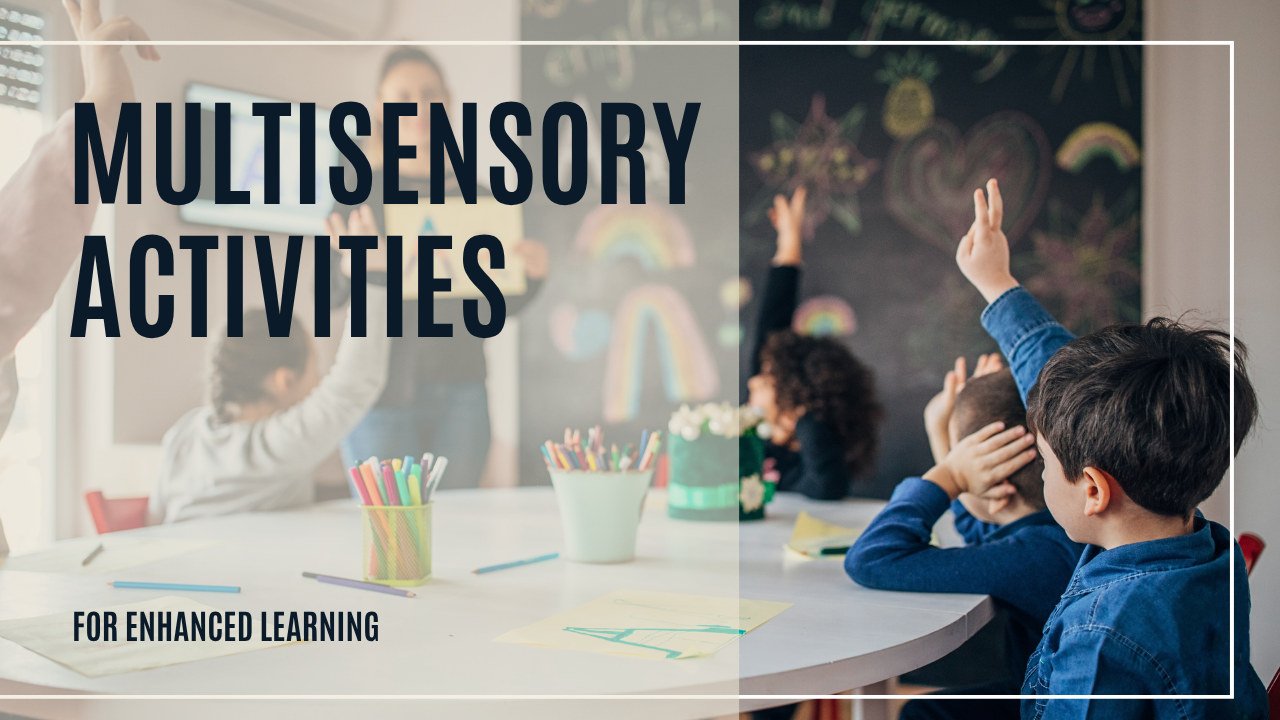
Multisensory activities are learning tasks that use more than one sense at the same time — seeing, hearing, touching, and moving — to make information stick. Instead of relying on a child just looking at a page, they engage the body and multiple senses, which reinforces memory and reaches different learning styles. For children with dyslexia, this isn’t just a nice extra — it’s a core part of how the brain best learns to read.
What are multisensory activities?
Multisensory activities use sight, sound, touch, and movement together to reinforce learning. Writing a word in sand while saying its sounds, or tapping out syllables while reading, are simple examples. The approach makes learning more engaging and activates multiple pathways in the brain — so a concept that might not stick through reading alone gets anchored through several senses at once.
Why do they work?
When a child only sees information, they have one route to remember it. Add sound, touch, and movement, and you create several routes — and several chances for the information to stick. For dyslexic learners, who often find the purely visual path to reading difficult, those extra pathways can be the difference between frustration and a breakthrough. This is exactly why the Orton-Gillingham approach is multisensory at its core.
7 multisensory activities to try at home
You don’t need special equipment — most of these use things you already have:
- Sand or shaving-cream writing: have your child write letters and words in a tray of sand or a layer of shaving cream while saying the sounds. Tactile feedback reinforces letter formation and spelling.
- Kinesthetic movements: use hand motions for sounds or syllables, or act out a story, to add movement to learning.
- Sensory bins: hide letters or objects in rice, beans, or water and have your child find and name them.
- Manipulatives and tiles: build and break words with letter tiles or magnetic letters to make spelling hands-on.
- Music and rhymes: songs and rhymes build phonological awareness through rhythm and melody.
- Visual supports: charts, diagrams, and graphic organizers help organize and remember information.
- Technology: well-chosen apps and interactive tools can add an engaging multisensory layer.
Our interactive Sound Cards and the dyslexia intervention curriculum build many of these activities right into the lessons.
Who benefits most?
The goal of multisensory learning is to engage children holistically, and that helps a wide range of learners — but it is especially powerful for students with learning differences like dyslexia. By engaging multiple senses, these activities improve understanding and retention and make learning more accessible. For a deeper look at the foundation skill they build, see phonemic awareness: how and why.
Frequently Asked Questions
What are multisensory learning activities?
They are learning tasks that engage more than one sense at the same time — sight, hearing, touch, and movement — to make information more memorable, such as writing letters in sand while saying their sounds.
Why are multisensory activities good for dyslexia?
Children with dyslexia often struggle with the purely visual route to reading. Engaging extra senses creates more pathways in the brain to anchor letter-sound knowledge, which is why structured, multisensory instruction is the gold standard for dyslexia.
What is an example of a multisensory activity?
Writing a word in a tray of sand while saying each sound aloud — combining touch, sight, and hearing — is a classic example. Building words with letter tiles is another.
What senses do multisensory activities use?
Most commonly sight, hearing, touch, and movement (kinesthetic), used together to reinforce a single concept.
Do multisensory activities help all children?
Yes. While they are essential for children with dyslexia, engaging multiple senses benefits learners of all kinds by making lessons more interactive and memorable.