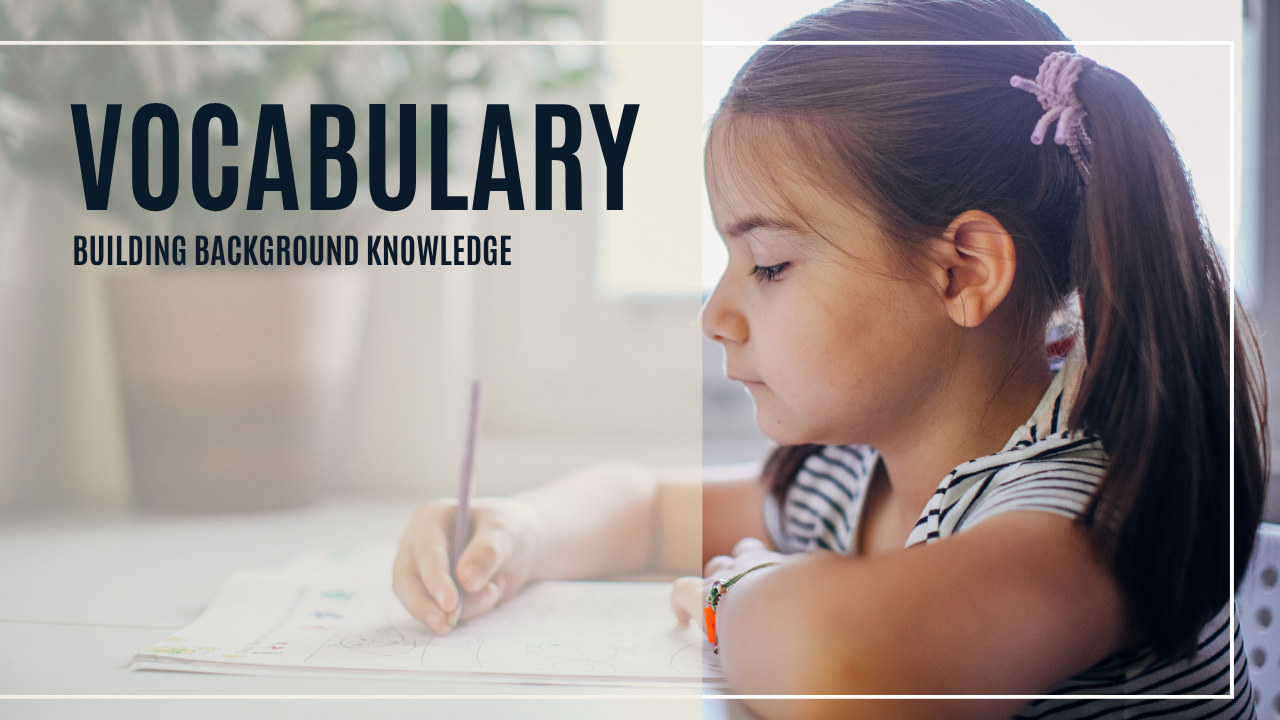
You build your child’s vocabulary by building their background knowledge: the more they know about the world, the easier it is to understand, remember, and use new words. Vocabulary doesn’t only grow in the classroom—it grows out of the real-world experiences a child has every day. As a parent, you have more power to expand that world than any worksheet does.
Why does background knowledge build vocabulary?
Background knowledge is everything a child already knows about a topic, and it acts like a net that catches and holds new words. When a child already understands what a desert is, words like arid, dune, and cactus have somewhere to land. Without that knowledge, the same words are just noise. The more experiences your child has, the more “hooks” they have to hang new words on—and the easier it becomes to understand new words, make connections, and comprehend new texts.
This is why two children can read the same passage and walk away with completely different understanding. The one with more background knowledge fills in gaps the author left out, while the other gets stuck on unfamiliar words and loses the thread. Researchers in the Science of Reading describe vocabulary and background knowledge as deeply connected—you can’t separate knowing words from knowing about the world. That’s good news for parents, because it means ordinary family life is one of the most powerful vocabulary programs available.
It also means you don’t have to drill word lists. A child who has visited a tide pool, helped repot a plant, or watched a documentary about volcanoes carries those experiences into every text they read for years afterward.
What everyday activities grow vocabulary?
You don’t need special materials. The richest vocabulary comes from doing real things and talking about them as you go. A few that work especially well:
- Visit museums, zoos, and aquariums. These introduce new concepts, animals, cultures, and historical events—all rich with vocabulary. Talk about what you see (“This exhibit shows how dinosaurs lived”), read the signs together, and let your child lead the exploration.
- Explore hobbies and hands-on activities. Cooking, gardening, crafting, and building teach words in context—ingredients, measuring, photosynthesis, blueprint. Explain terms as you use them: “We need to knead the dough, which means we press and fold it with our hands.” Then ask your child to explain the process back to you.
- Take nature walks and neighborhood adventures. Outdoor observation teaches vocabulary about animals, plants, weather, and geography. Bring a notebook and make a “discovery journal” with labeled drawings, and look for animal tracks, cloud shapes, or different leaves.
- Go on local field trips. A fire station, library, farmer’s market, or bakery opens the door to words about jobs, history, and civic life. Ask questions, take photos, and follow up with a book or video on the same topic.
The key in every case is conversation. The outing plants the experience; talking about it turns the experience into language.
How does reading aloud help?
Reading together daily is one of the most reliable ways to grow vocabulary, because books expose children to words they rarely hear in everyday conversation. Keep reading aloud even after your child reads independently—the books you read to them are usually richer than the ones they can decode alone.
- Choose a mix of fiction and nonfiction so your child meets both story language and information-rich words.
- Pause to explain new words and ask questions: “Do you know what migration means?” or “Why do you think the author used enormous instead of big?”
- Encourage your child to retell the story or share their thoughts in their own words, which forces them to put new vocabulary to use.
If reading aloud is a struggle because your child is fighting the words themselves, that’s a signal to look at the decoding side too. Our Dyslexia Intervention Curriculum and the companion workbook on Amazon build the structured-literacy foundation that lets vocabulary work stick.
What games and screen time actually help?
Not all screen time is equal, and games can be genuinely useful when they’re word-rich and shared. The goal is interaction, not just exposure.
- Educational shows and documentaries. Age-appropriate programs like Wild Kratts, Magic School Bus, or National Geographic Kids introduce topics and vocabulary in a fun visual format. Watch together, then talk: “What new word did you hear?”
- Word-rich games. Guess Who?, 20 Questions, Scrabble Jr., and Boggle make vocabulary playful and interactive. You can also make your own matching or sorting games using words from a recent book or outing.
What turns passive watching into vocabulary growth is the conversation afterward—asking your child to name, describe, and explain what they saw.
Why does this matter more for kids with dyslexia?
Children with dyslexia spend so much energy decoding words that they often read less, and reading less means fewer chances to bump into new vocabulary. Background knowledge helps close that gap from the other direction: when meaning and context are strong, an unfamiliar word is far less likely to derail comprehension. Rich experiences also give your child confidence to participate in reading and discussion, which protects motivation.
You can pair this work with explicit, structured reading instruction so both sides grow together. If your child is struggling with reading comprehension or has dyslexia, a specialized, research-based program provides the structured literacy support that’s tailored to where your child actually is—while everyday vocabulary-building keeps their world, and their words, expanding.
The takeaway is simple: the more experiences your child has, the more hooks they have to hang new words on. By intentionally offering rich, real-world learning opportunities—and talking through them as you go—you’re not just building vocabulary. You’re raising a curious, confident reader for life.
Frequently Asked Questions
What is background knowledge and why does it matter for vocabulary?
Background knowledge is everything a child already knows about a topic. It gives new words a place to connect, so the more a child knows about the world, the easier it is to understand, remember, and use unfamiliar vocabulary.
How can I build my child's vocabulary at home without worksheets?
Do real things and talk about them: cook, garden, take nature walks, visit museums or the library, and read aloud daily. Explain new words as they come up and ask your child to use them back to you in their own words.
Does reading aloud still help once my child can read on their own?
Yes. Keep reading aloud even after your child reads independently, because the books you read to them are usually richer than the ones they can decode alone, and they expose your child to words rarely heard in conversation.
Are educational shows and games good for vocabulary?
They can be, when they're word-rich and shared. Programs like Magic School Bus and games like Boggle or 20 Questions introduce new words, but the real growth comes from talking about what your child saw or learned afterward.
Why is vocabulary especially important for children with dyslexia?
Kids with dyslexia spend extra energy decoding and often read less, which means fewer chances to meet new words. Strong background knowledge and vocabulary help meaning carry through even when decoding is hard, supporting comprehension and confidence.