

The best way to prep for an IEP meeting is to gather your child’s records, decide what you want to ask for, and write it down before you walk in. An IEP (Individualized Education Program) meeting can feel intimidating the first time, but it is simply a planning conversation where you and the school agree on the supports your child will get. A little preparation turns it from something that happens to you into something you help shape.
What is the IEP process?
An IEP is a written, individualized plan that spells out the special-education services, accommodations, and goals a public school will provide for a child with a qualifying disability. The process usually starts with an evaluation of your child’s strengths and challenges. From that assessment, the team develops specific goals and the instructional strategies meant to support them. Understanding the broad steps ahead of time — evaluation, eligibility, goal-setting, and review — helps you feel less blindsided and more prepared to discuss your child’s needs with the educational team.
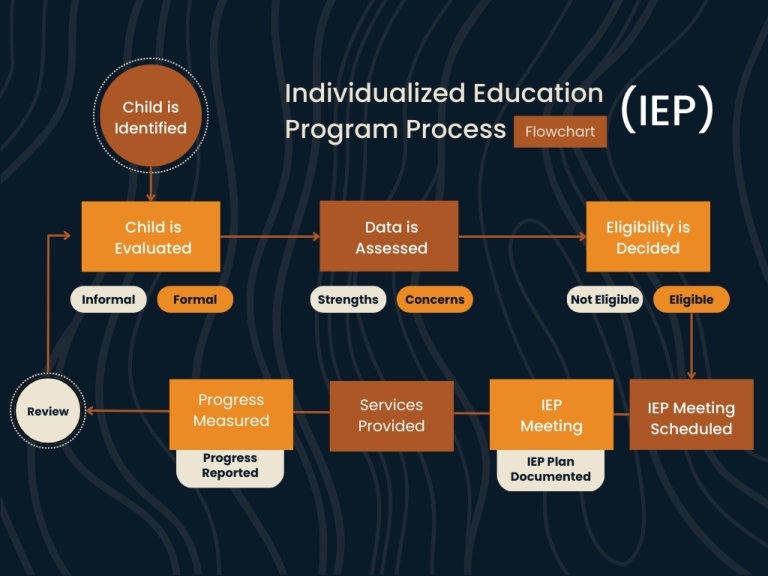
The exact rules and timelines vary by state and district, so it is worth asking your school for a copy of their procedures. Knowing the structure of the meeting in advance lets you focus your energy on the part only you can speak to: your child.
In general, the team that writes the plan includes you, at least one of your child’s general-education teachers, a special-education teacher or provider, and a school representative who can commit district resources. Once the IEP is in place it is reviewed at least once a year, and your child is typically reevaluated periodically to confirm the plan still fits. Knowing those checkpoints exist reminds you that the first meeting is a starting point, not a final verdict — you can request a meeting to revisit the plan if it is not working.
Why is your role as a parent so important?
You are an equal and essential member of the IEP team, not a guest at the table. You provide insights no one else in the room has: how your child learns, what interests them, what frustrates them, and how a hard day at school looks at home. That information helps the team align goals and strategies with your child’s real strengths and needs.
Active participation also sets the tone. When you come prepared and engaged, it fosters a collaborative environment that leads to more personalized support. If you want a deeper look at what you are legally entitled to ask for, read understanding your rights as a parent of a dyslexic child, and for working alongside the school over time, see our guide to collaboration with schools.
What accommodations should you ask for?
Before the meeting, make a list of the accommodations you want to discuss. Accommodations change how a child accesses learning without changing what they are expected to learn. Not every support fits every child, so think about which ones match your child’s specific struggles. Common accommodations for dyslexic learners include:
- Extended time on reading and writing tasks and tests
- Audiobooks or text-to-speech for grade-level material
- Speech-to-text or a scribe for written assignments
- Oral instructions repeated or provided in writing
- Reduced copying from the board and shortened spelling lists
- A quiet space for tests and reading aloud
- Explicit, structured literacy instruction delivered by a trained provider
Use a list like this as a starting point and add ideas of your own. If the school resists providing appropriate support, our article on what to do when the school refuses help walks through your options. You can also keep structured practice going at home with a Dyslexia Intervention Curriculum built on the same Orton-Gillingham principles schools rely on.
How do you set good IEP goals?
Clear goals are the cornerstone of an effective IEP. They act as a roadmap, naming the skills and milestones your child is working toward and the instructional strategies that will get them there. As you prep, consider drafting a few goals tailored to your child so you can compare them with what the team proposes. Strong IEP goals are:
- Measurable — written so progress can actually be tracked, not vague (“read 50 grade-level words per minute” rather than “read better”)
- Attainable — ambitious but realistic for the timeframe
- Evidence-based — tied to instruction with research behind it, such as structured literacy and the Science of Reading
Well-defined objectives give your child a structured plan and give you a concrete way to ask, at the next review, whether the plan is working.
What should you bring to the meeting?
Walking in organized keeps the conversation focused. A simple folder or a one-page summary is enough. Bring:
- Your child’s most recent evaluation reports and report cards
- Any private testing, tutoring notes, or doctor’s letters
- Work samples that show what your child can and can’t do
- Your written list of requested accommodations
- Two or three draft goals in your own words
- A short note on your child’s strengths and interests
- A pen and paper to take notes — or a trusted person to take them for you
You do not have to sign anything at the meeting itself. It is reasonable to ask for time to review the document at home before you agree to it. Take notes on what is promised, who is responsible, and when each support starts, so you have a record to refer back to. If something is decided verbally, ask for it to be written into the plan — in an IEP, what is written is what the school is obligated to deliver.
Finally, go in expecting a conversation rather than a confrontation. Most teams genuinely want to help, and a calm, prepared parent who can point to specific concerns and concrete requests is far easier to work with than a vague one. By understanding the process and participating actively, you help shape an educational experience built around your child’s real needs — and you set the tone for every review meeting that follows.
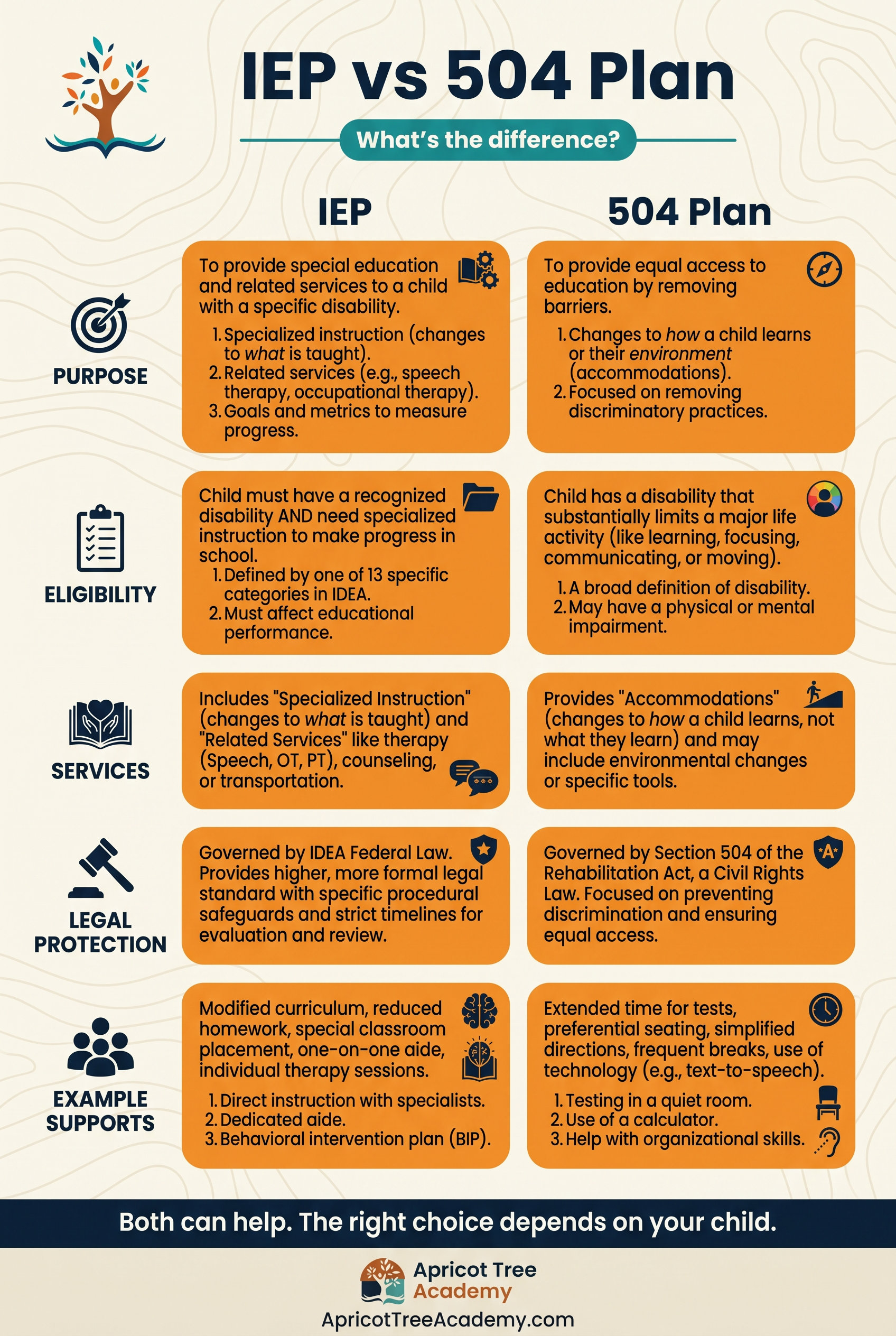
Frequently Asked Questions
What is an IEP meeting?
An IEP meeting is a planning session where parents and school staff agree on the special-education services, accommodations, and goals for a child with a qualifying disability. It results in a written Individualized Education Program the school is responsible for following.
How do I prepare for my child's IEP meeting?
Gather your child's evaluation reports, report cards, and work samples, then write down the accommodations you want and a few draft goals in your own words. Bring a note on your child's strengths so the team plans around the whole child, not just deficits.
What accommodations can I request for a child with dyslexia?
Common requests include extended time, audiobooks or text-to-speech, speech-to-text for writing, oral and written instructions, shortened spelling lists, and explicit structured-literacy instruction. Choose the ones that match your child's specific needs rather than asking for everything.
Do I have to sign the IEP at the meeting?
No. You can ask for time to take the document home and review it before signing. Signing usually indicates agreement, so it is reasonable to read it carefully first and ask questions about anything unclear.
What makes a good IEP goal?
A strong IEP goal is measurable, attainable, and evidence-based. That means progress can be tracked with real data, the target is realistic for the timeframe, and the instruction behind it is backed by research such as structured literacy.