

As a parent, your core rights come from federal law: dyslexia is covered under IDEA, which means your child can qualify for a free, appropriate public education with the support they need. Advocating well isn’t about being adversarial — it’s about staying informed, participating in meetings, documenting everything, and knowing what the school is obligated to do.
What rights do I have under IDEA?
Dyslexia is a recognized learning disability under the Individuals with Disabilities Education Act (IDEA), which means your child is entitled to specific protections and supports in public school. FAPE — a Free and Appropriate Public Education — is the right of every qualifying child to receive an education tailored to their individual needs at no cost to the family. As a parent, you have the power to request services that cater to your child’s unique learning needs, and you are a full member of the team that decides what those services look like.
Understanding your rights under FAPE is essential to navigating the school’s testing requirements and making sure your child isn’t left to struggle without help. The same law gives you the right to ask questions, request evaluations, and disagree with the school’s decisions through a defined process.
How do I request a school evaluation?
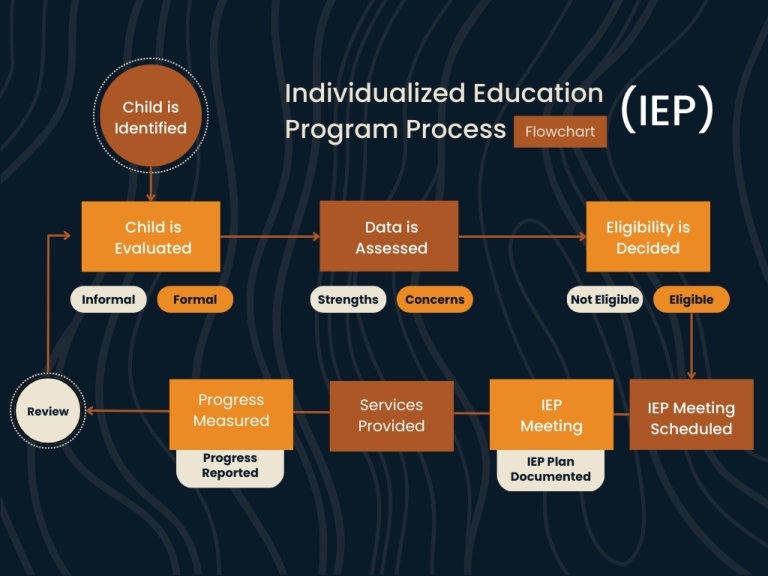
If your child needs an assessment for an IEP, you can request it — in writing is best, so there’s a dated record. Once you do, the school typically has 60 days to assess, develop an IEP, and hold an IEP meeting, although timelines may vary by state. Importantly, schools are obligated under the Child Find Mandate of IDEA to conduct a comprehensive initial evaluation, not just a brief screening.
- Put your request in writing and keep a copy, with the date.
- Be specific that you are requesting a full evaluation for special education eligibility.
- Note the timeline that applies in your state so you know when to follow up.
- If you’re unsure where to start after a diagnosis, our guide on what to do first after a dyslexia diagnosis walks through the early steps.
What’s the difference between an IEP and a 504 plan?
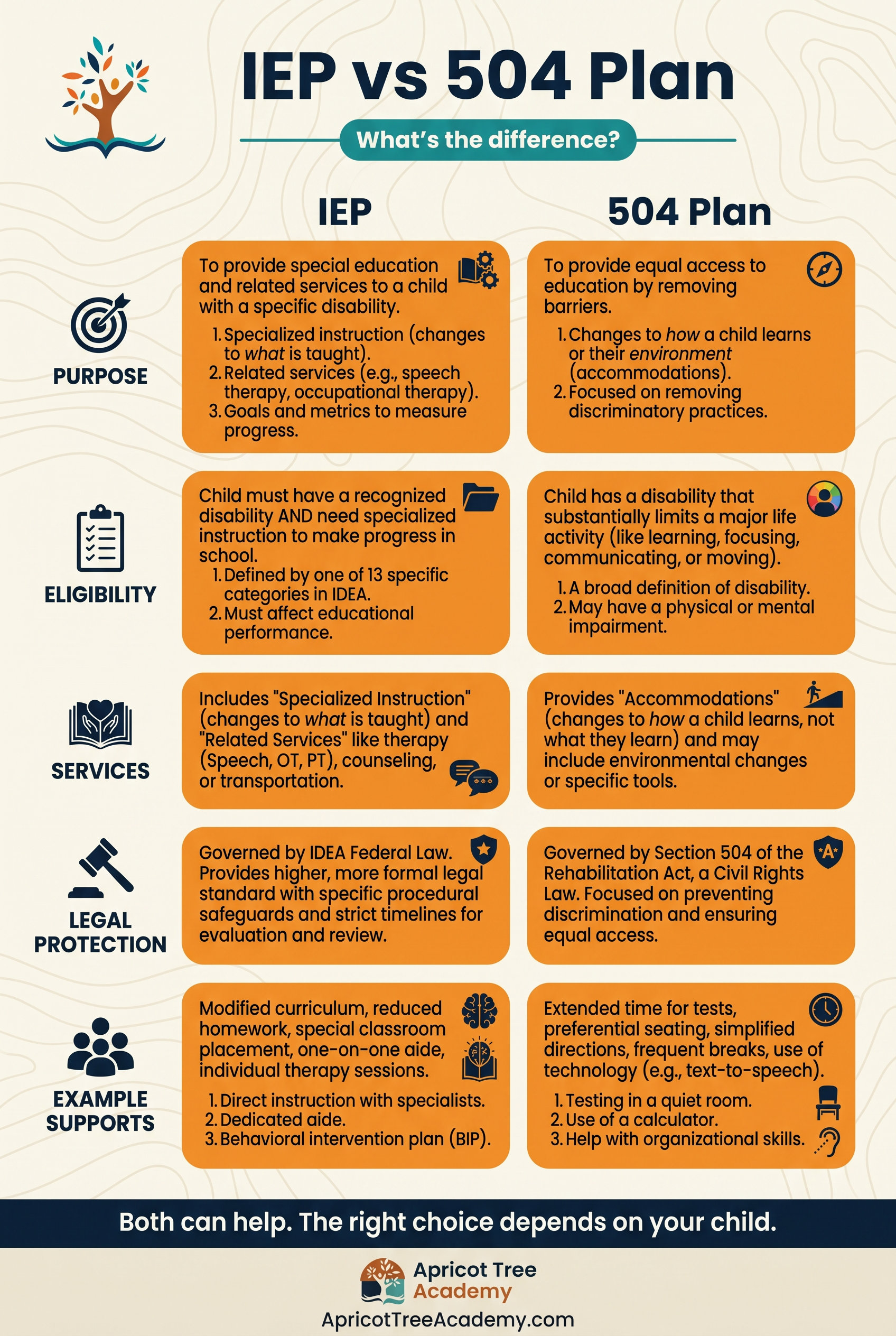
Both an IEP and a 504 plan can support a child with dyslexia, but they come from different laws and work differently. An IEP (Individualized Education Program) is a legal document under IDEA that provides specialized instruction and services, while a 504 plan provides accommodations to give a child equal access to the general curriculum. Familiarize yourself with how each one works so you can advocate for the right fit for your child.
- An IEP includes specialized instruction, measurable goals, and progress monitoring.
- A 504 plan focuses on accommodations — for example, extended time or audiobooks — rather than specialized instruction.
- A child who needs explicit, structured reading intervention often needs an IEP, not just a 504 plan.
Whatever the plan, the instruction your child receives matters as much as the paperwork. Approaches grounded in Orton-Gillingham, structured literacy, and the Science of Reading are what actually move the needle — you can build the same kind of structured practice at home with our Dyslexia Intervention Curriculum or the companion workbook on Amazon.
How do I participate in IEP or 504 meetings?
Attend crucial meetings such as IEP or 504 plan meetings and engage actively in your child’s educational journey. Express any concerns you have, whether they relate to academic progress, social interactions, or how accommodations are actually being carried out day to day. You have the right to ask for clarification if any part of the process is unclear, and you are not obligated to sign anything until you’ve had sufficient time to research and understand the implications.
Take an active role in decision-making by collaborating with teachers, administrators, and other professionals. Share what you know about your child’s strengths, challenges, and preferred learning styles — that insight helps the team build strategies that work. Stay alert to any changes in policies or programs that might affect your child, and document every interaction: emails, phone calls, in-person meetings, and paperwork. A thorough record is one of your most useful advocacy tools.
- Bring written notes and questions so nothing gets lost in the moment.
- Ask for clarification on anything you don’t understand before agreeing.
- Take time to review documents at home before signing.
- Keep a dated log of every contact with the school.
For a step-by-step walkthrough, see our guide on how to prepare for your IEP meeting.
What if the school denies my request?
If the school denies your request for an evaluation, it must provide a Prior Written Notice that explains the reasons for the denial. That document matters — it puts the school’s reasoning in writing and gives you a clear basis for following up or disagreeing. Remember, too, that under the Child Find Mandate the school’s obligation is to evaluate comprehensively, not to satisfy a request with a quick screening.
A denial isn’t necessarily the end of the road. You can ask for the reasons in writing, request an independent evaluation, or seek outside guidance. If you’re hitting a wall, our article on what to do when the school refuses help covers your options in more detail.
Where can I get more help?
If you need further assistance, reach out to local advocacy groups or educational consultants who specialize in dyslexia. Building a strong working relationship with your child’s school also goes a long way — our guide on collaborating with schools can help you keep that partnership productive. By being an informed advocate, you can navigate the educational system and secure the best opportunities for your child’s success.
Your active involvement is essential in shaping an education plan that supports your child’s unique needs and helps them reach their potential. The more you understand your rights, the more confidently you can use them.
Frequently Asked Questions
Is dyslexia covered under IDEA?
Yes. Dyslexia is a recognized specific learning disability under the Individuals with Disabilities Education Act (IDEA), which can entitle a qualifying child to a free school evaluation, an IEP, and specialized support.
How long does the school have to evaluate my child?
After you request an evaluation, schools typically have about 60 days to assess your child, develop an IEP, and hold an IEP meeting. Exact timelines vary by state, so check the rules where you live.
What is the difference between an IEP and a 504 plan?
An IEP provides specialized instruction and services under IDEA, while a 504 plan provides accommodations that give a child equal access to the general curriculum. A child who needs structured reading intervention often needs an IEP.
Do I have to sign the IEP at the meeting?
No. You are not obligated to sign anything until you have had enough time to research and understand the implications. You can ask for clarification and take documents home to review before agreeing.
What can I do if the school denies an evaluation?
If the school denies your request, it must give you a Prior Written Notice explaining why. You can ask for the reasons in writing, request an independent evaluation, or contact a local advocacy group or educational consultant for guidance.