
Inside our dyslexia intervention program, effective support comes from one thing above all: a predictable, multisensory lesson structure that teaches the same sound through both reading and spelling, every single time. Apricot Tree Academy’s program follows the Orton-Gillingham approach—structured literacy grounded in the Science of Reading—and breaks each weekly lesson into the same eight repeatable parts. This page walks you through what actually happens in a lesson, so you can see how the pieces fit together and why the order matters.
What is structured literacy, and why does it work?
Structured literacy is an explicit, systematic way of teaching reading that builds skills in a deliberate order, from sounds to words to sentences to stories. Our program follows the Orton-Gillingham approach, an evidence-based methodology that teaches phonics explicitly and systematically rather than leaving children to guess words from pictures or context. For a child with dyslexia, nothing is left to chance: every sound, rule, and pattern is taught directly, practiced until it sticks, and then reviewed.
This matters because the dyslexic brain needs more repetition and more direct instruction to build the neural pathways for reading. The same structured-literacy principles power our Dyslexia Intervention Curriculum, and they are why a parent with no teaching background can deliver effective instruction at home. The structure does the heavy lifting.
What does one lesson actually look like?
Each lesson in our program is built from the same eight parts, in the same order. That consistency is the point—your child always knows what comes next, and you always know what to teach. Here is the anatomy of a single lesson:
- Quick Drill Decoding — brief reading and decoding warm-ups using sound cards, short-vowel posters, phonemic awareness drills, and scooping drills to reinforce phonics already taught.
- Explicit reading-concept instruction — a focused mini-lesson on one phonics rule or pattern, taught directly so the child understands it before applying it.
- Engaging lesson activities — multisensory, interactive practice like word sorts and picture-based exercises that lock in the new concept.
- Word reading practice — word lists aligned to the lesson’s phonics, giving the child ample, low-pressure repetition.
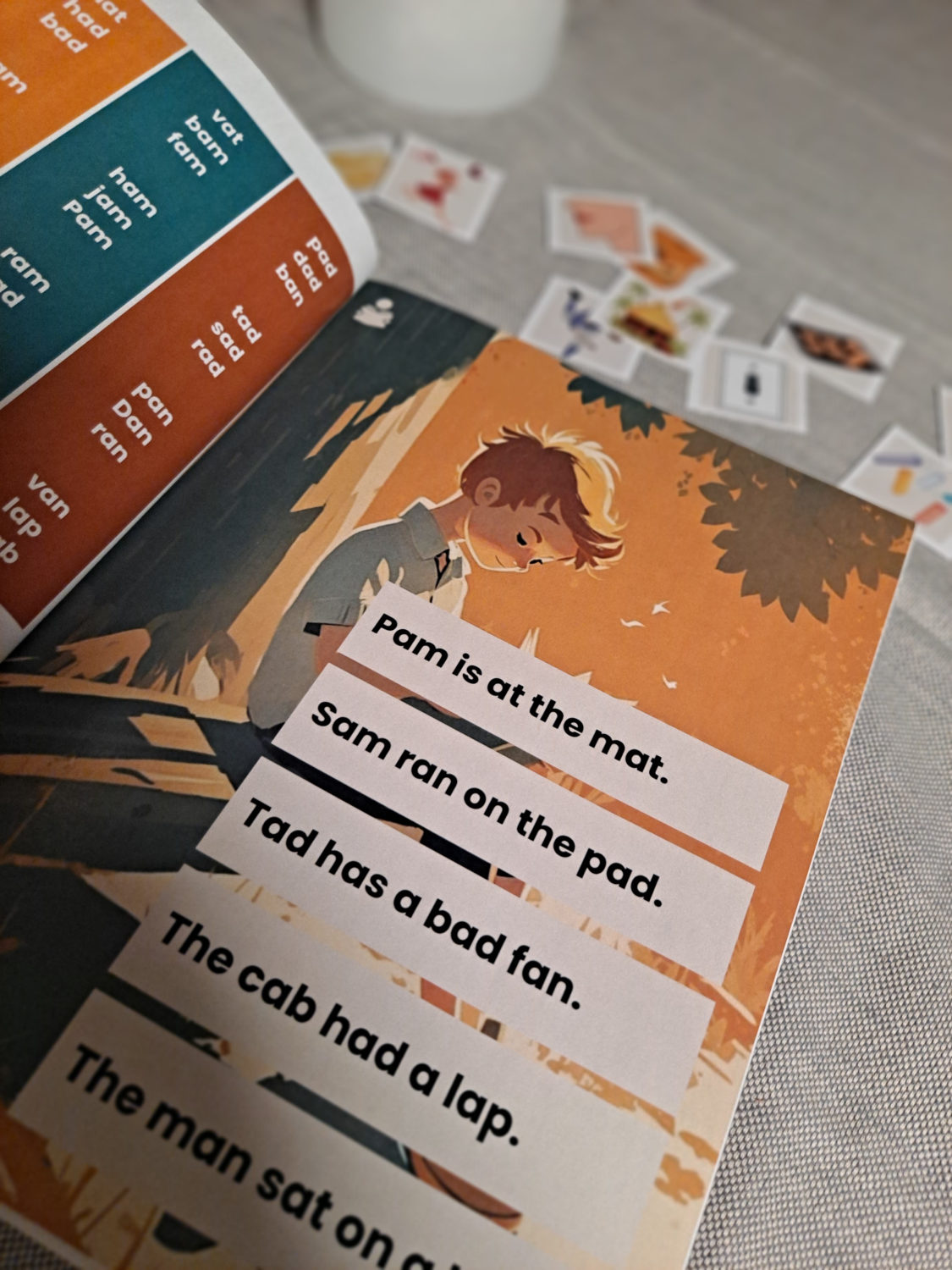
- Sentence reading — reading the new concept in context while reviewing previously learned material, building fluency and comprehension.
- Quick Drill Encoding — spelling-focused drills, including identifying letter sounds, spelling words with tiles, and backward-scooping exercises.
- Writing words and sentences — structured writing that starts with simple words and grows into sentences, with editing for punctuation, spelling, and structure.
- Decodable story reading — a short story built from the sounds the child has learned, followed by comprehension questions to develop critical thinking.
A full lesson runs roughly 50–60 minutes, but it is designed to flex. If a day feels too long or too fast, you can shorten the word and sentence lists or stretch one lesson across two sessions. The structure stays the same; the pace bends to your child.
Why teach reading and spelling together?
Notice that the lesson teaches the same sounds twice—once for reading (decoding) and once for spelling (encoding). That pairing is deliberate. Decoding is turning written letters into sounds to read a word; encoding is turning sounds into letters to spell one. They are two sides of the same skill, and teaching them together makes each one stronger.
When a child spells “ship” with letter tiles right after reading it, the connection between sound and symbol gets reinforced from both directions. This is the reading-and-writing connection that structured literacy is built on, and it is one reason a child who only practices reading worksheets often still can’t spell. Our printable workbook on Amazon gives your child the encoding practice pages that match each reading lesson, so the two never drift apart.
What makes the program multisensory?
Multisensory instruction means a child sees, hears, says, and physically moves through a concept at the same time, instead of just looking at a page. In our lessons, that shows up everywhere: sound cards a child looks at and says aloud, scooping drills where a finger sweeps under blended sounds, letter tiles a child moves by hand to build words, and word and picture sorts that turn phonics into a tactile activity.
Engaging more than one sense at once gives the brain multiple pathways to store the same information, which is exactly what a dyslexic learner needs to make a skill automatic. To go deeper on why this works, see The Power of Multisensory Activities for Enhanced Learning. The activities feel like games to a child, but each one is doing real instructional work.
How does the program build confidence, not just skills?
Reading skill and self-esteem are tied together for a struggling reader. A child who has failed at reading often expects to fail again, and that expectation gets in the way of learning. Our program is built to break that cycle by making success frequent and visible. Because lessons move in small, ordered steps, a child experiences wins constantly—reading a word list, finishing a decodable story, spelling a sentence correctly.
We coach parents to celebrate progress and perseverance rather than perfection, which builds a growth mindset over time. The decodable stories matter here too: because they only use sounds the child has already mastered, the child can actually read them independently—often for the first time. For more on protecting your child’s confidence through this work, read Dyslexia and Self-Esteem.
How do I get started at home?
You do not need a teaching credential or specialized training to deliver this program. Everything is scripted and sequenced so you can open a lesson and follow it step by step. Here is how parents typically begin:
- Start with the curriculum overview. The Dyslexia Intervention Curriculum page explains what is included—the teacher’s guide with full lesson plans plus the student workbook.
- Get the workbook. The workbook on Amazon holds the student-facing pages your child writes on during each lesson.
- Set a consistent, short routine. Aim for the 50–60 minute lesson, but split it across two days if that keeps your child calm and engaged.
- Learn the why behind the method. If you want the research foundation first, The Science of Reading explains why structured, explicit phonics is the approach that works.
The whole program is designed so that consistency—not intensity—is what produces results. A steady lesson a few times a week, delivered the same way each time, is what rewires a dyslexic reader’s brain for reading. You are not trying to cover ground quickly; you are trying to make each sound, rule, and pattern automatic before you move on. That is the quiet engine behind effective dyslexia support: the same dependable lesson, repeated until reading becomes second nature.
Frequently Asked Questions
What is the dyslexia intervention program based on?
It follows the Orton-Gillingham approach, an explicit, systematic, multisensory method grounded in structured literacy and the Science of Reading. Phonics rules are taught directly rather than left for the child to guess from context or pictures.
What are the parts of one lesson?
Each lesson has eight repeatable parts: Quick Drill decoding, explicit reading-concept instruction, lesson activities, word reading, sentence reading, Quick Drill encoding, writing words and sentences, and a decodable story with comprehension questions. The order stays the same every week.
How long does a lesson take?
A full lesson runs about 50 to 60 minutes. It is built to flex, so you can shorten the word and sentence lists or spread one lesson across two days if your child needs more time to master a concept.
Do I need teaching experience to use it?
No. The lessons are scripted and sequenced step by step, so a parent with no teaching background can deliver them effectively. The structure does the instructional planning for you.
Why does the program teach reading and spelling together?
Reading (decoding) and spelling (encoding) are two sides of the same skill, and teaching them together makes each stronger. Spelling a word with letter tiles right after reading it reinforces the sound-to-symbol connection from both directions.