If your child is 5 to 10, struggling to read, and someone told you to look at Barton, you probably looked at the price next. The full ten-level system costs about $3,900, and the tutor (often you) has to pass Barton’s own screening first. So you’re wondering what else works. This guide compares five Barton alternatives on what matters at a kitchen table: method, cost, prep and how much training you need. One note up front: we make Apricot Tree Academy, which is on this list. We’ve tried to be fair to every program, Barton included, and we show our criteria so you can judge.
How do the Barton alternatives compare?
| Program | Best for | Cost to start | Parent training | Features |
|---|---|---|---|---|
| Apricot Tree Academy (we make this) | Scripted at-home lessons on a budget | $54.98Workbook 1 + Teacher Guide 1 | None required | Open-and-go, ages 5 to 10 |
| PRIDE Reading Program | A full script, bought level by level | $94.90first kit | Course inside the online guide | Free placement test, six levels |
| All About Reading | Younger kids, mild to moderate struggles | $159.95per level, plus tiles | None required | One-year money-back guarantee |
| Lexercise | Families who want a therapist involved | $150a month | Short training videos | Weekly lesson plus daily games |
| UFLI Foundations | Smallest budget, confident teachers | $70manual | None, but written for classrooms | 148 lessons, free toolbox |
| BartonBaseline | Moderate to severe dyslexia | $350Level 1 | 3 to 5 hours of video per level | Ten levels, very thorough |
Prices from each program’s official site, checked October 2026. Shipping and tax are extra, and prices change often, so confirm before you buy.
Why do parents look for Barton alternatives?
Barton has earned its reputation. It is built for one-on-one tutoring, it is thorough, and every level includes tutor training on video. But four things push families to look elsewhere:
- Cost. At $350 to $400 a level, the full system is a large purchase for one family, and Understood’s overview of the program calls it expensive.
- Time. Barton’s FAQ asks for at least two hours of one-on-one tutoring a week and estimates 2 to 3 years for moderate dyslexia at twice a week, 4 to 5 years for severe. Each level also has 3 to 5 hours of training video for you to watch.
- Screenings. The tutor takes a short Tutor Screening that checks you can hear speech sounds clearly, and the child takes a Student Screening. A child who isn’t ready yet is pointed to a sound-awareness program first.
- Feel. Some parent reviewers describe the student pages as plain and the lessons as repetitive, and Understood notes the program is hard to modify when it isn’t working.
None of this makes Barton a bad program. It makes it a big commitment, and it is not the only way to get structured reading help at home. (If you are weighing a tutor instead, see tutoring vs parent-led intervention.)
How did we choose these alternatives?
Every program here had to pass five tests:
- Same method. Explicit, systematic phonics. Most are Orton-Gillingham based.
- A real home path. A parent can deliver it, or it comes with someone who does.
- Verified prices. Every price was checked on the program’s own site in October 2026.
- Honest fit. Each one gets a list of what to weigh, ours included.
- Enough for daily practice. Material for 30 to 60 minutes a day, five days a week.
Orton-Gillingham is a way of teaching reading that is explicit, systematic and multisensory: children see, say, hear and move as they learn each sound and rule.
Which programs are worth a look instead of Barton?
1. Apricot Tree Academy: a scripted program you can start this week for under $60
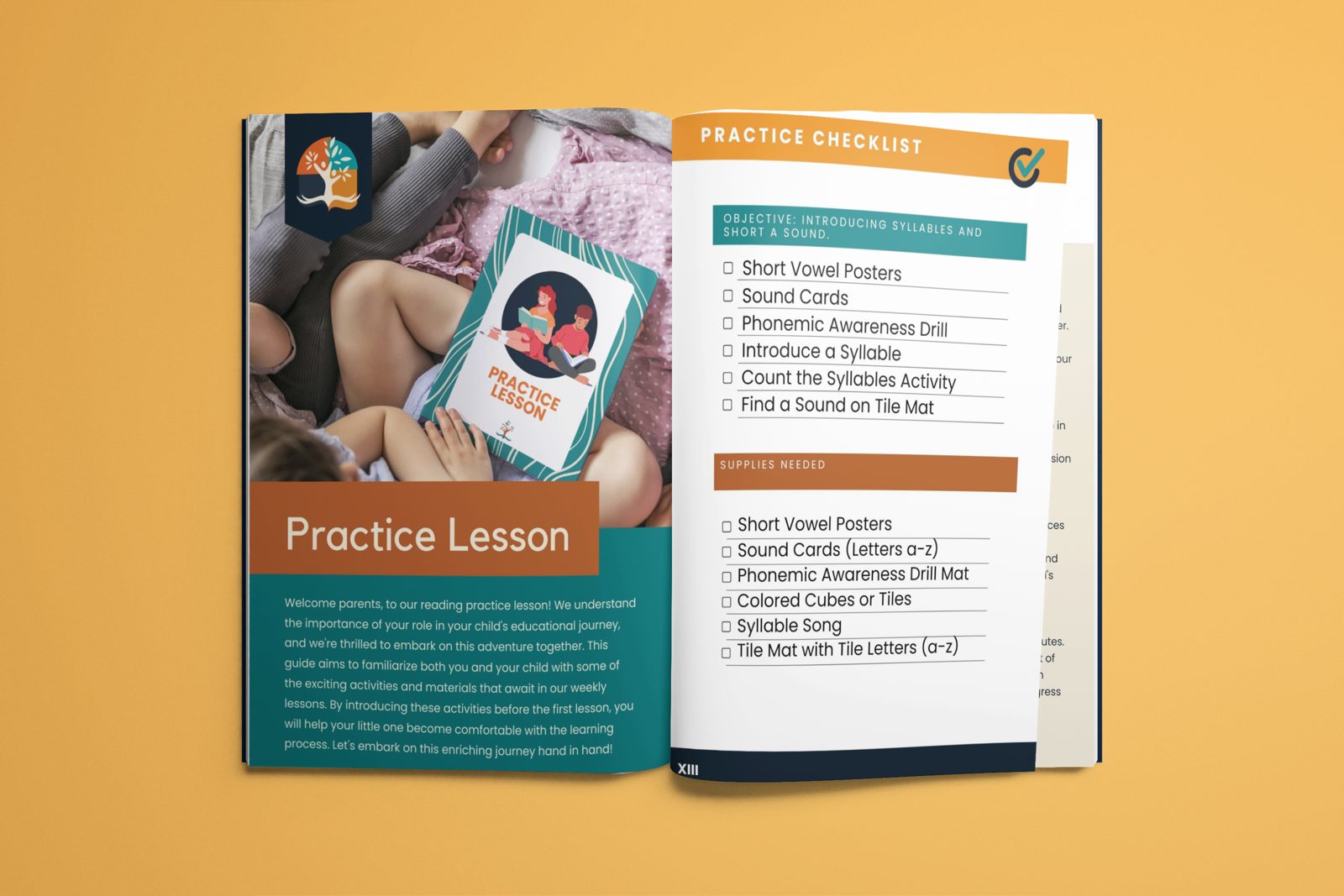
We make this one, so judge it on the criteria above, not on our word. Apricot Tree Academy is a parent-led dyslexia intervention curriculum built on the Orton-Gillingham approach for children ages 5 to 10: scripted lessons, workbooks, games and flash cards, with a companion teacher guide. Each level is 12 lessons (about 12 weeks) across three print workbooks, and the guide tells you what to say and do at every step. See what is inside on the curriculum page.
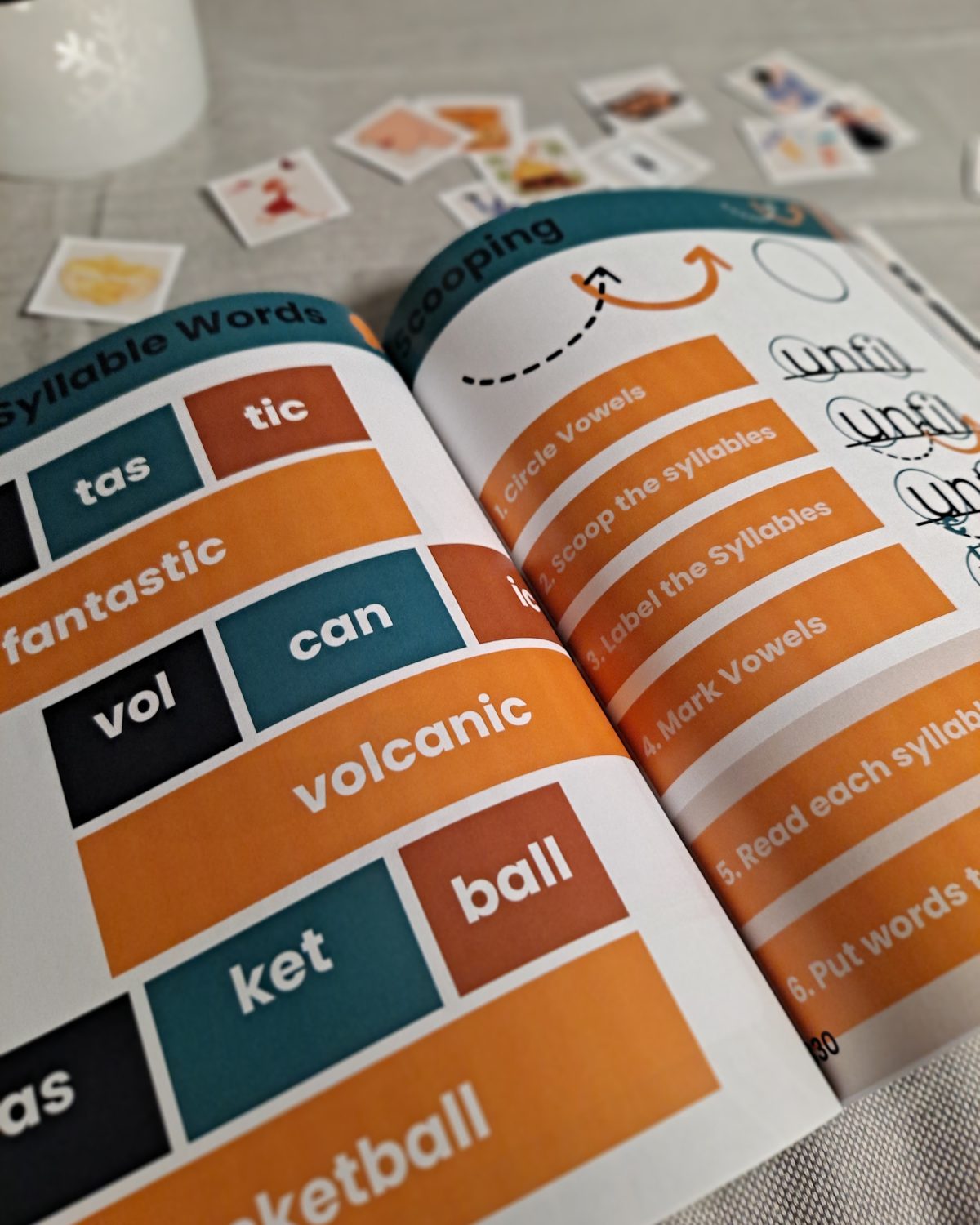
Price (checked October 2026): Workbook 1 is $39.99 on Amazon and its matching Teacher Guide is $14.99, so you can start for $54.98. All of Level 1 (three workbooks, three teacher guides and the Treetop Tales reader) comes to $179.94. Level 2 (Lessons 13 to 24) uses the same workbook pricing.
What works:
- No training course or screening test before you start: open the guide and teach.
- Multisensory work built in: letter tiles, sound cards, games and decodable stories, with reading, writing and spelling practice together.
- Free extras while they last: the Parent Courses (including ParentTutor Training) and the Resource Hub printables.
Where we fall short:
To be fair about the gaps: we are newer and smaller than the big names, so there are fewer family reviews to read. The curriculum covers two levels (24 lessons) today, so it does not take a child as far as a ten-level system. Workbooks are print only, and teacher guides are sold separately. For severe dyslexia, a trained one-on-one specialist may still be the better fit.
Best for: parents of 5 to 10 year olds who want Barton-style structure without the training hours or the price.
2. PRIDE Reading Program: a full script at a lower entry price
PRIDE is an Orton-Gillingham program written for parents and tutors. Each kit includes a student workbook, a scripted online teaching guide with PRIDE’s training course, sound cards and a letter tiles kit.
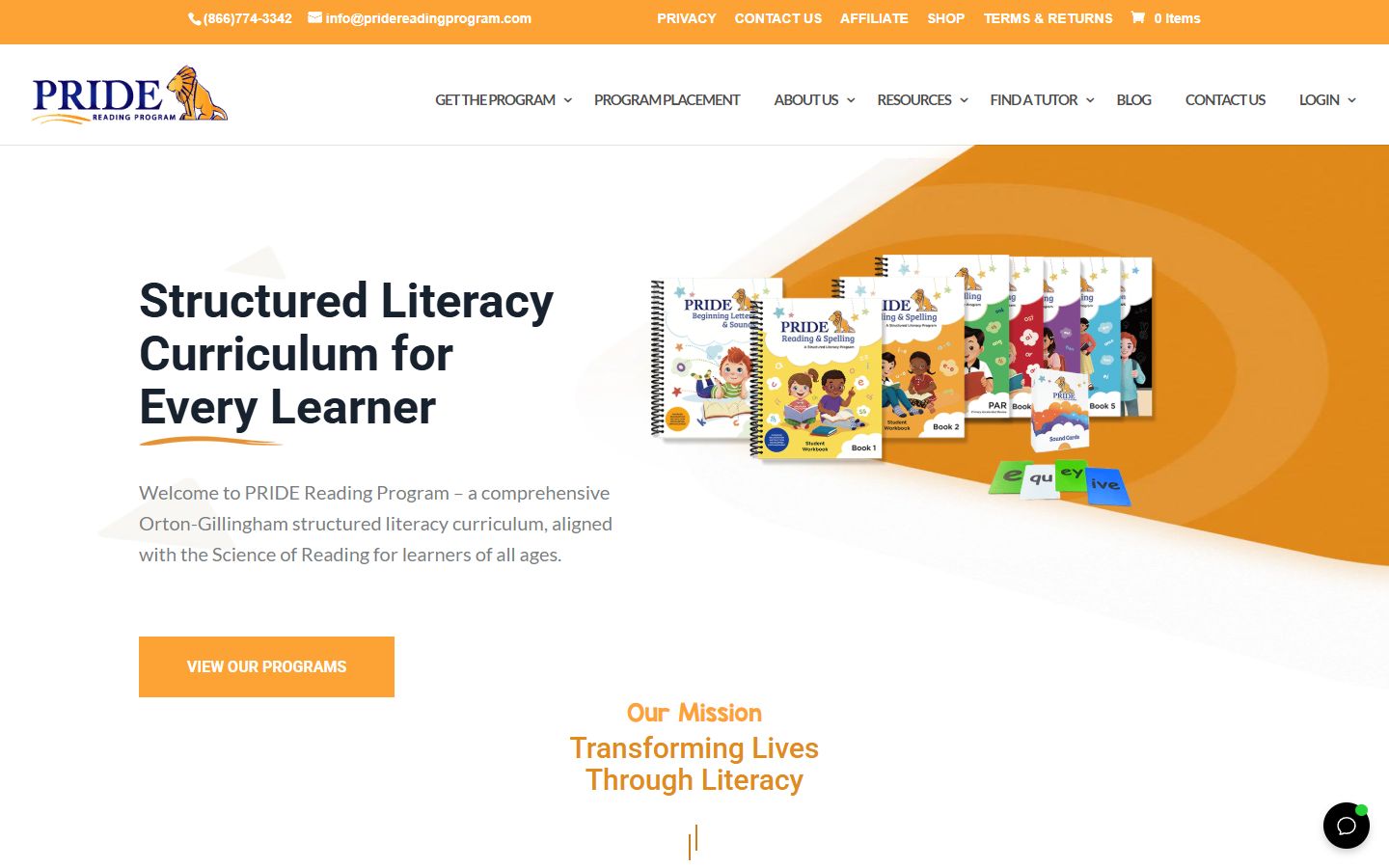
Price (checked October 2026): Full kits run from $94.90 (Beginning Letters & Sounds) to $159.85 (Red, Purple and Blue), and all six come to about $869. Decodable readers are extra: $79.95 per Little Lions set (PRIDE shop).
What works:
- A free online placement test tells you which level to buy.
- The script keeps prep low.
- Dictation pages in the workbook cover spelling, so there is no second program.
What to weigh:
- Readers cost extra.
- PRIDE suggests 30 to 45 minute lessons; some reviewers of an earlier edition found it repetitive for quick learners and split lessons up.
Best for: families who like Barton’s structure but want to spend hundreds, not thousands.
3. All About Reading: gentle and polished for younger kids
A popular Orton-Gillingham based program with letter tiles, readers and games. Children move on by mastery, not grade.
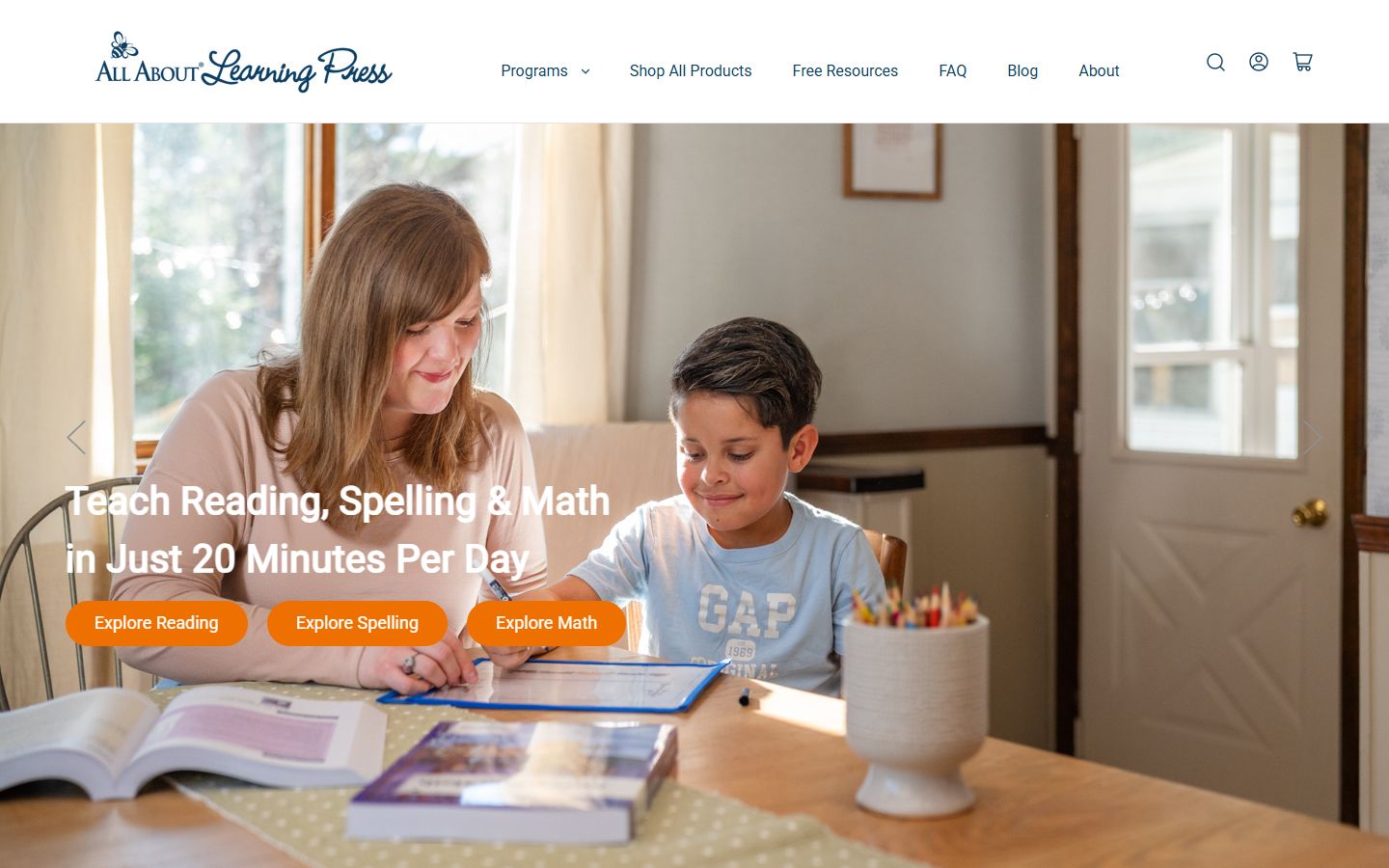
Price (checked October 2026): Pre-Reading is $119.95 and Levels 1 to 4 are $159.95 each. Add Letter Tiles ($25.95, once per family) and a Review Box ($17.95). Spelling is a separate program: All About Spelling Level 1 is $64.95 (All About Learning Press).
What works:
- Scripted lessons and a big parent community.
- A one-year money-back guarantee (you pay shipping both ways).
- Free placement tests for each level.
What to weigh:
- Reading and spelling are two purchases and two programs to teach.
- The publisher suggests about 20 minutes a day, so plan extra practice to reach 30 to 60.
- Review sites generally steer severe dyslexia toward Barton or a one-on-one tutor.
Best for: 5 to 8 year olds with mild to moderate struggles.
4. Lexercise: a licensed therapist in the loop
An online structured-literacy program. In Basic Therapy you deliver one 30-minute recorded lesson a week, your child plays practice games about 15 minutes a day, and you can message a therapist. Professional Therapy adds a live 45-minute online session each week.
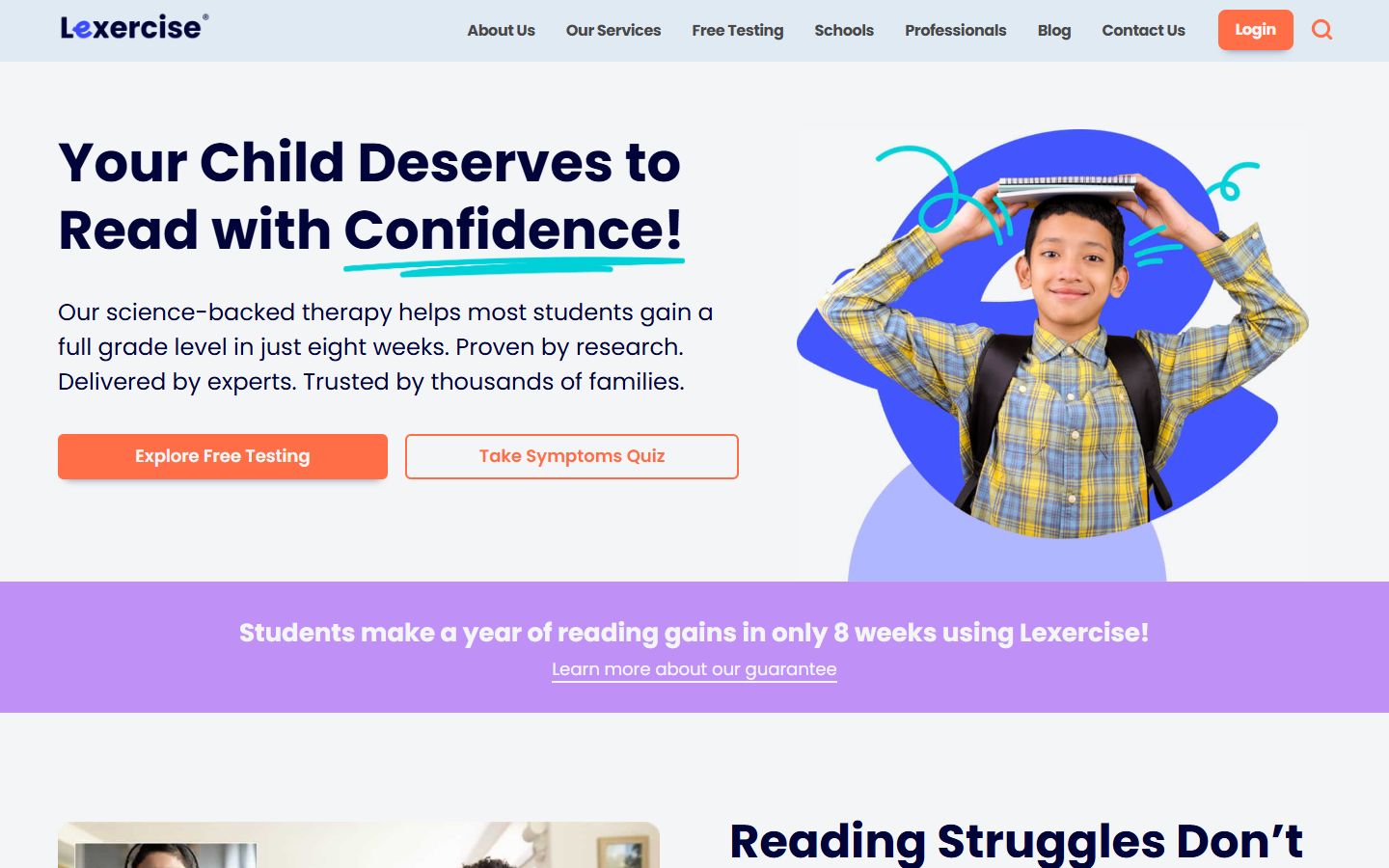
Price (checked October 2026): Basic Therapy, which you deliver, is $150 a month. Professional Therapy, with a live therapist, is $495 a month and varies by therapist. Both renew automatically and can be cancelled anytime (Lexercise services).
What works:
- Professional guidance without leaving home.
- HSA and FSA funds can usually be used.
- A free dyslexia test and consultation before you commit.
What to weigh:
- It is a subscription: a year of Basic is about $1,800.
- Much of the daily practice is on a screen, with less hands-on tile work.
Best for: parents who want someone else steering the plan.
5. UFLI Foundations: the lowest cost, if you’re comfortable adapting
From the University of Florida Literacy Institute: an explicit, systematic phonics program of 148 lessons, each built on the same eight-step routine.
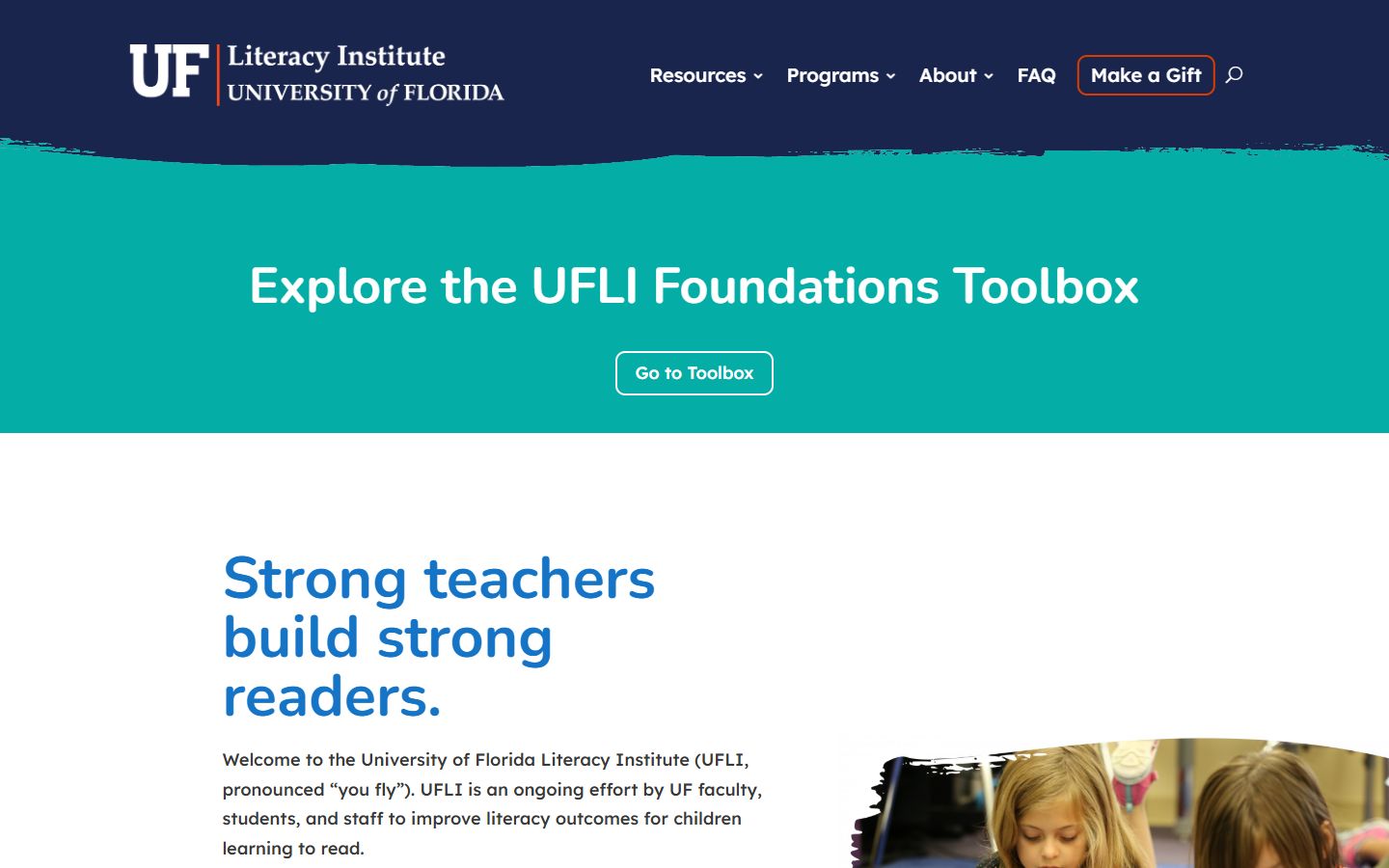
Price (checked October 2026): The manual is $70 plus shipping from Ventris Learning. Slide decks, decodable passages and games are free in UFLI’s online toolbox.
What works:
- The lowest price on this list.
- A clear, well-organized sequence.
- Many schools use it, so home and class can match.
What to weigh:
- It is written for classroom teachers (slide decks, whole-group routines), so you adapt it for one child.
- You gather your own tiles and hands-on materials.
Best for: confident parents on a tight budget, or kids whose school already uses it.
Which Barton alternative fits your child?
- You want to start this week, with a script, on a budget: Apricot Tree Academy.
- You want a full script across many levels and can spend a few hundred dollars: PRIDE.
- Your child is young, the struggles are milder, and you like polished materials: All About Reading.
- You want a therapist involved: Lexercise.
- You have the smallest budget and you’re comfortable adapting: UFLI Foundations.
- Your child has severe dyslexia and time and money allow: stay with Barton, or hire a certified tutor.
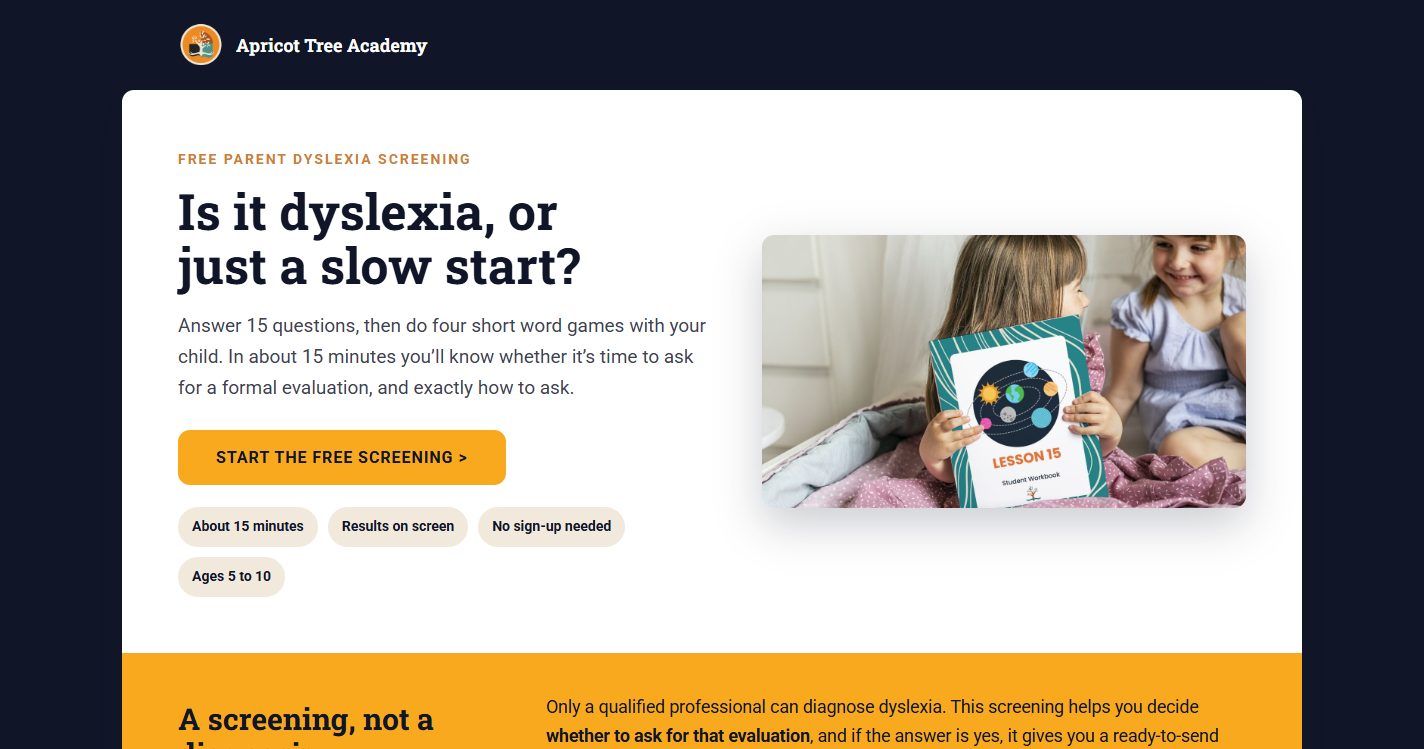
Whichever program you choose, consistency matters more than the brand. We recommend 30 to 60 minutes a day, five days a week, with weekends off. Not sure where your child stands yet? Our free dyslexia screening takes about 15 minutes at home, and it tells you whether to ask the school for a formal evaluation and how to ask.
Should you stick with Barton?
Our take: if your child has severe dyslexia, you can give it two or more hours a week, and the cost won’t delay your start, Barton is a sound choice, and we would tell a friend so. The bigger risk is not picking the wrong Orton-Gillingham program. It is waiting months to begin while you save for the perfect one. Every program here teaches the same core skills in a planned order, and progress takes time with all of them (here is a realistic timeline). Pick the one you can start this month and keep doing.
Frequently Asked Questions
What is the best Barton Reading alternative in 2026?
For most parents teaching a 5 to 10 year old at home, Apricot Tree Academy. It uses the same Orton-Gillingham approach as Barton, needs no tutor screening or training videos, and starts at $54.98 instead of $350. For severe dyslexia, with time and budget to spare, Barton or a certified tutor may still fit best.
Is Barton Reading and Spelling worth the cost?
For moderate to severe dyslexia, often yes. Barton is thorough, one-on-one, and includes tutor training in every level. But at $350 to $400 a level, about $3,900 for all ten as of October 2026, plus at least two hours a week for two years or more, it is a big commitment for one family.
What is the cheapest alternative to Barton Reading?
Apricot Tree Academy has the lowest start-up cost: $54.98 for Workbook 1 and its Teacher Guide, and $179.94 for all of Level 1. The UFLI Foundations manual is $70 and covers a longer sequence, but it is written for classroom teachers. PRIDE kits start at $94.90. Prices checked October 2026.
Do I have to pass a test to teach Barton?
Yes. Barton asks every tutor to pass a short Tutor Screening that checks you can hear speech sounds clearly, and each child takes a Student Screening before starting. Apricot Tree Academy, PRIDE and All About Reading have no tutor test: you open the scripted guide and teach.
Can I teach Orton-Gillingham at home without Barton's training?
Yes. Scripted programs tell you what to say and do in every lesson. Apricot Tree Academy pairs its teacher guides with free Parent Courses, including ParentTutor Training, which walks you through running each lesson step by step. Plan on 30 to 60 minutes a day, five days a week.